Reimagining End-to-End Auto Claims Through Service Design
The Project: This project focused on improving a commercial auto claims experience for a global insurer, spanning the full journey from first notice of loss through resolution. The process involved multiple stakeholders, drivers, fleet managers, brokers, and claims teams, and required a more unified, user-centered approach to reduce friction and improve consistency across the service.
The Challenge: The claims experience was fragmented, manual, and inconsistent across roles, leading to delays, miscommunication, and user frustration. There was no shared understanding of the end-to-end journey or the critical “moments that matter,” making it difficult for the organization to prioritize improvements or modernize the experience effectively.
My Role: As the Service Designer, I led a qualitative discovery effort, guiding a small team through research, synthesis, and journey mapping. I partnered closely with stakeholders to translate insights into actionable service improvements that informed product strategy and operational transformation.
Our Approach:
Conducted in-depth stakeholder interviews across key user groups, including drivers, brokers, and fleet managers, to capture a holistic view of the claims journey.
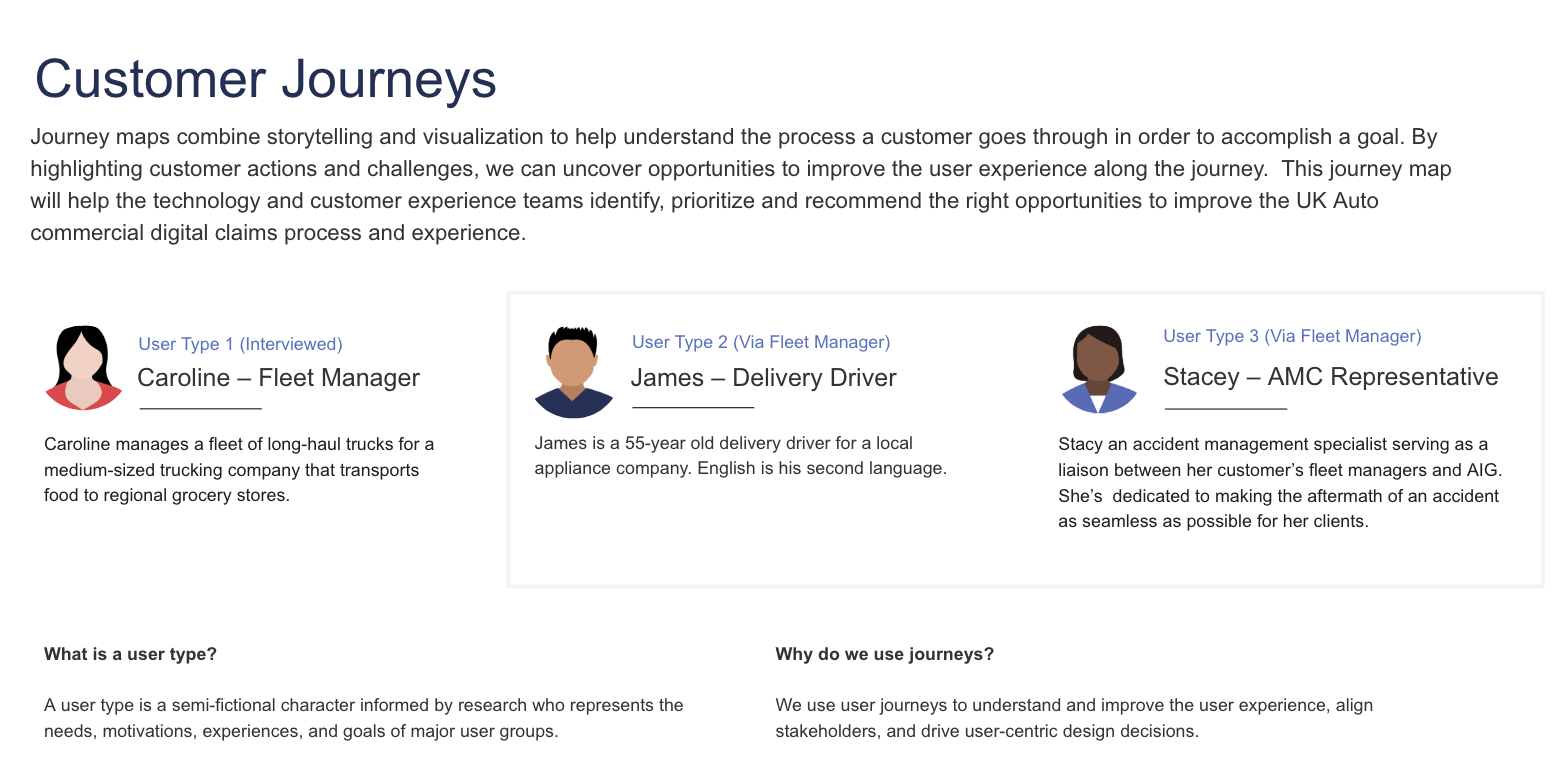
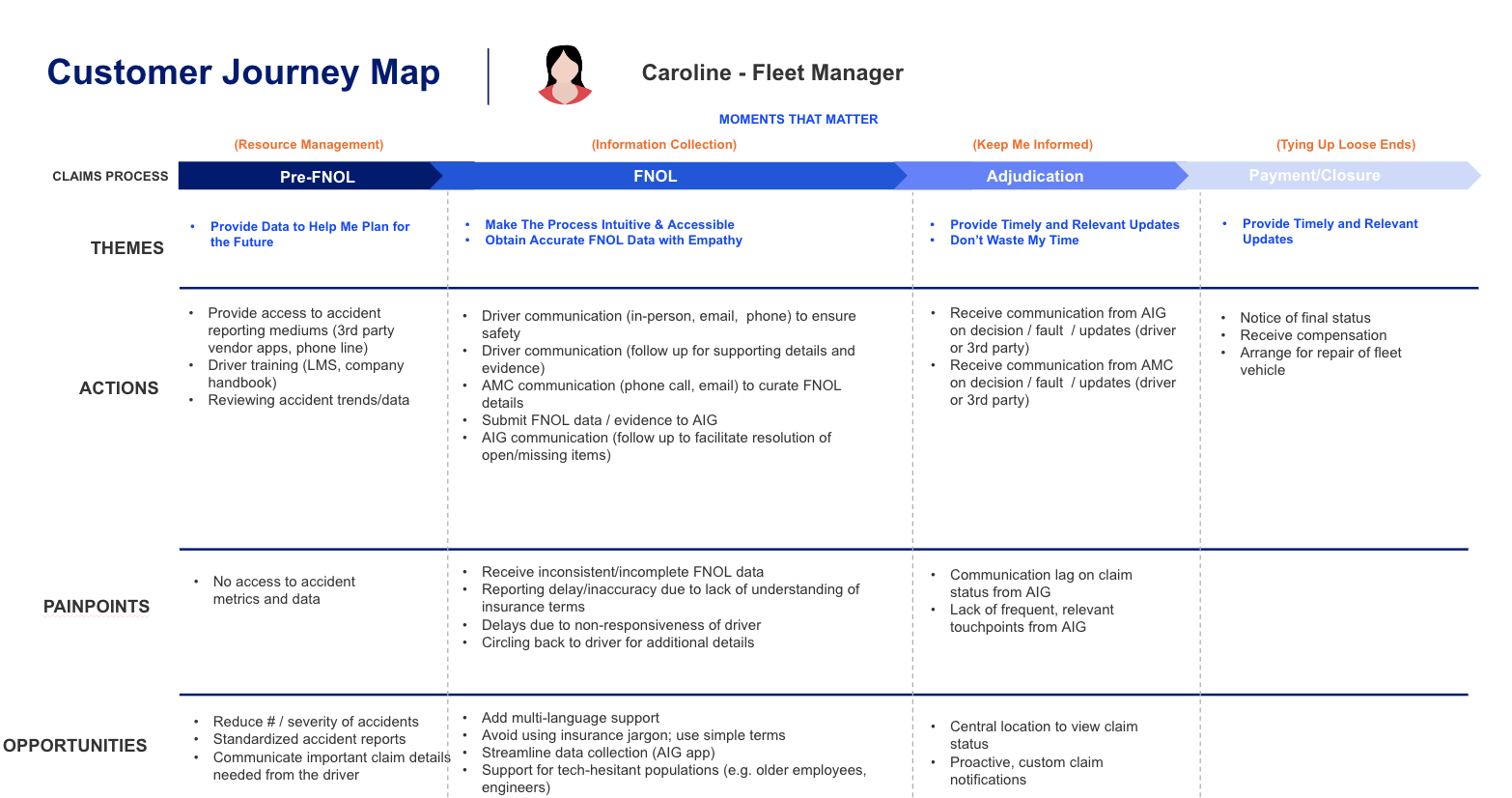
Synthesized 125+ data points and translated them into personas and end-to-end journey maps, highlighting pain points, breakdowns in communication, and opportunities for improvement.
Facilitated synthesis sessions to align stakeholders around shared insights and identified key themes, including inconsistent reporting practices, unclear communication touchpoints, and lack of technology support.
Deliverables
Journey map
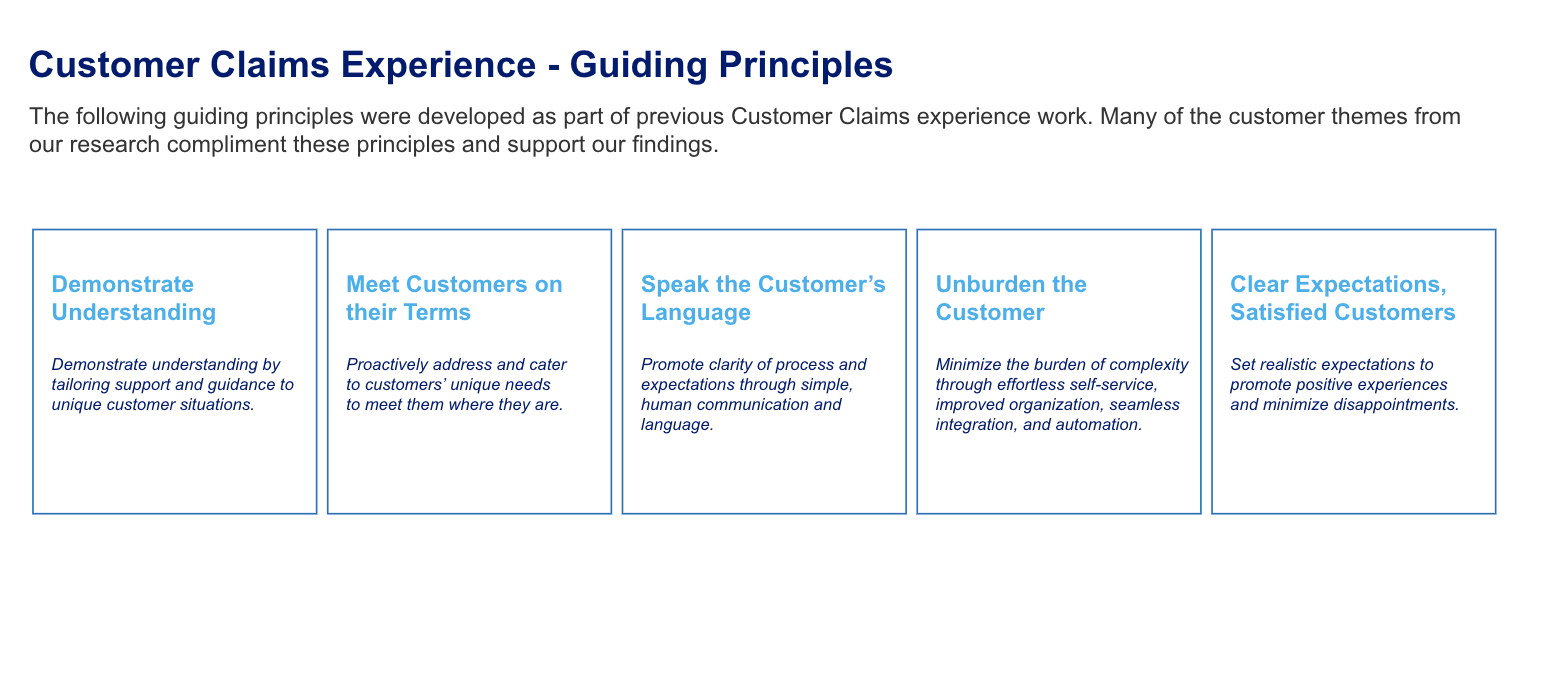
Customer claims experience guiding principles
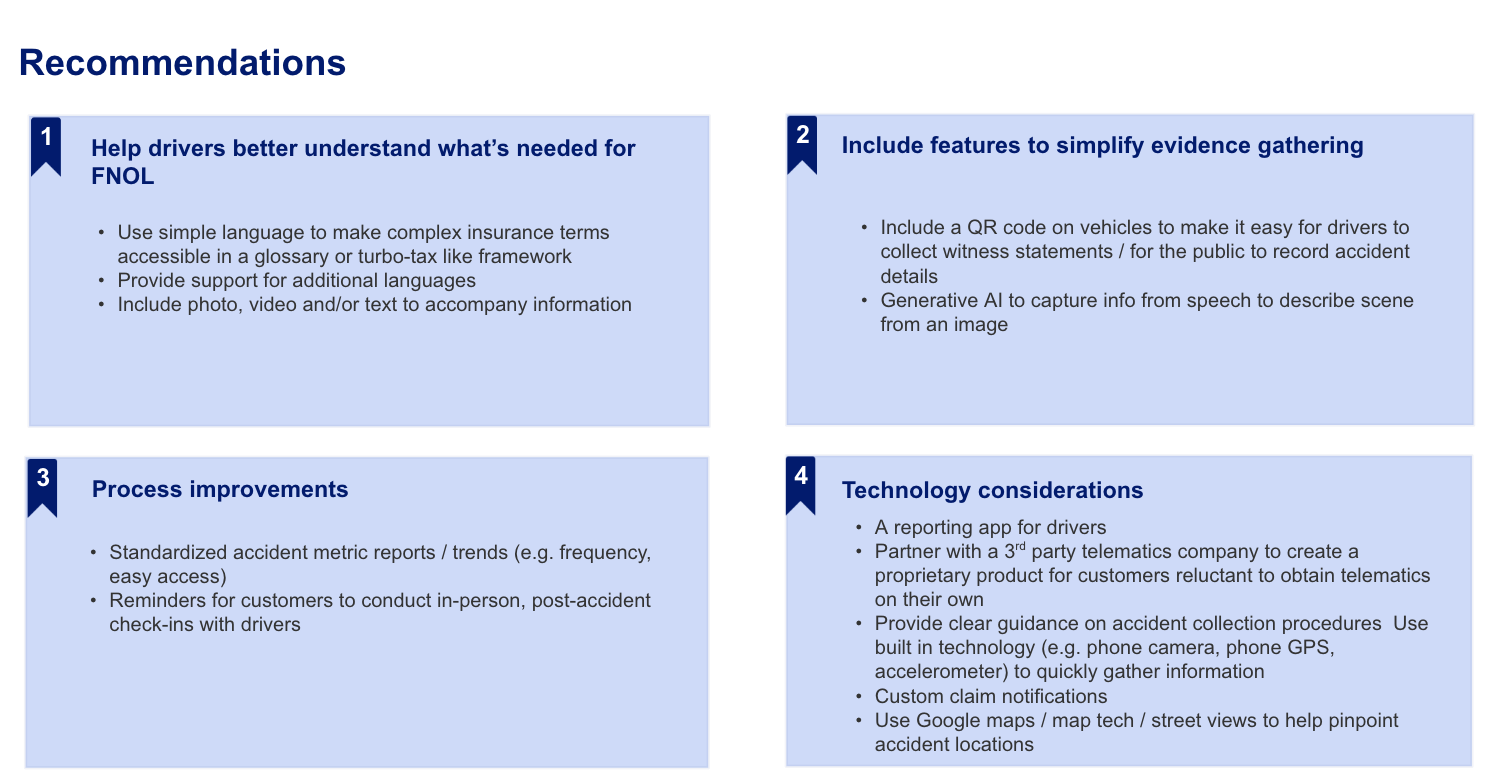
Strategic recommendations and opportunities for improvement